

In the instant economy of 2026, patience is no longer a virtue—it’s a memory. For Small and Medium-sized Enterprises (SMEs), particularly in competitive markets like Cyprus, the speed of response has evolved from a “nice-to-have” service metric into the primary driver of revenue.
The data is unequivocal: modern customers interpret a delay not as being “busy,” but as a rejection. This post explores the financial and psychological reasons why leads leave if they don’t get an answer in under 5 minutes, backed by the latest economic research.
1. The Physics of the “5-Minute Rule”
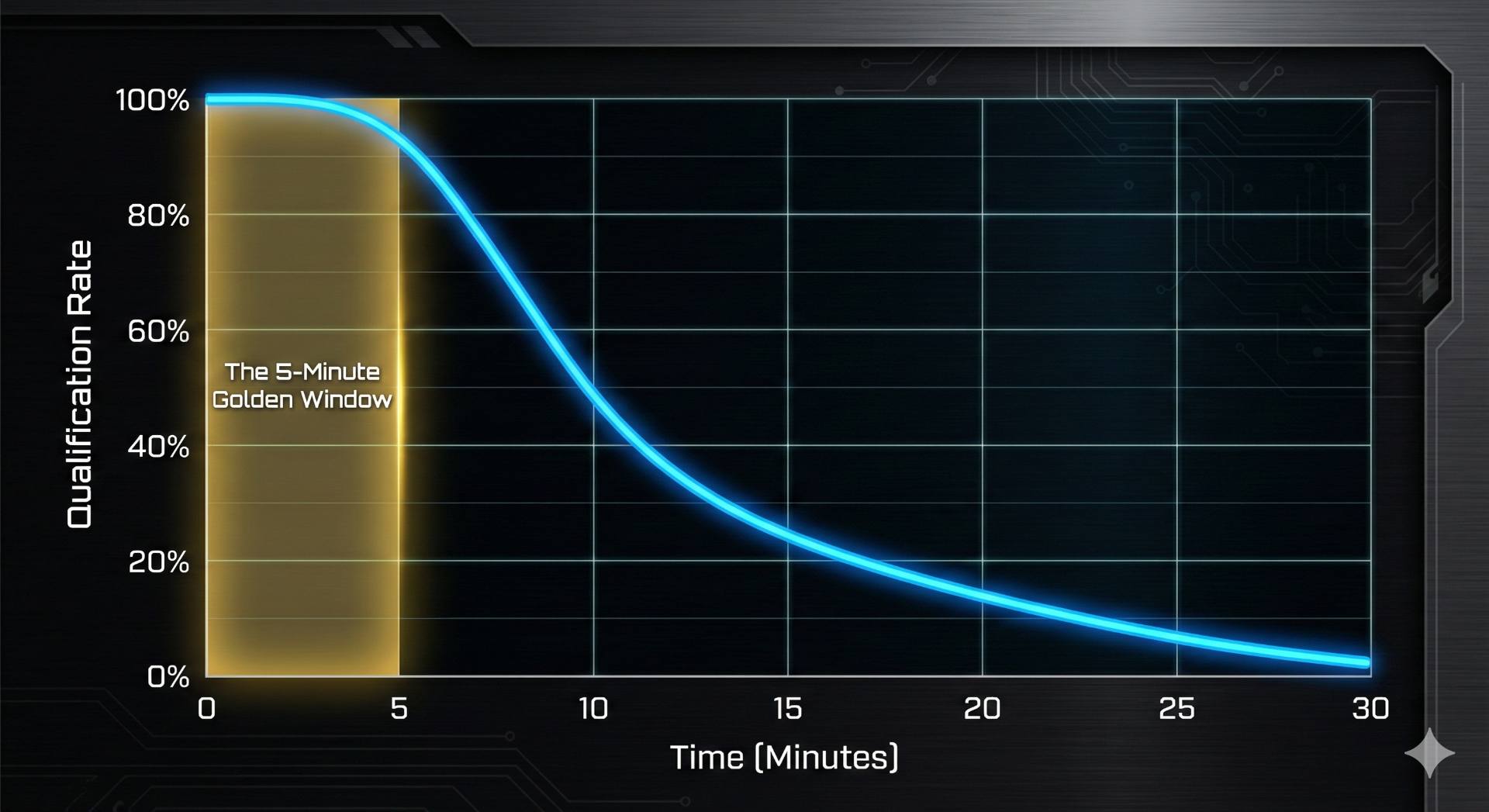
The “5-Minute Rule” isn’t a random target; it is a biological deadline rooted in human attention spans. When a potential client submits an inquiry, they are in a state of peak intent. This window closes rapidly.
According to data analyzed by the Harvard Business Review and recent 2025 studies, leads contacted within 5 minutes are 100 times more likely to qualify than those contacted after just 30 minutes.
Despite this exponential decay in opportunity, a startling operational gap remains. Research covering hundreds of B2B companies reveals that more than 99% fail to respond within this 5-minute window. The average response time for a phone call hovers around 14 hours and 29 minutes. In 2026, waiting 14 hours for a response is functionally equivalent to ignoring the customer entirely.
2. The Psychology of the “Anxious Consumer”
Why are 2026 consumers so impatient? It is not just entitlement; it is anxiety. Years of economic volatility have created a “caution economy,” where consumers seek emotional reassurance alongside their purchase.
- The Reassurance Deficit: A fast response signals competence, stability, and care. Silence triggers anxiety.
- The Gen Z Paradox: Contrary to the “text-only” stereotype, 71% of Gen Z consumers now prefer reaching out via live phone calls to solve problems quickly. They want the efficiency of digital speed with the resolution power of a voice conversation.
If your business relies on voicemail or email queues that are checked once a day, you are failing the psychological test of the modern buyer. They demand an “always-on” presence that only intelligent automation can provide without burning out human staff.
3. The Financial Autopsy: What Silence Costs You
The cost of slow service is not abstract; it is a direct tax on your revenue.
- The Cost of Missed Calls: For small businesses, a single missed call represents more than just a lost conversation. When factored annually, the average SME loses approximately $126,000 per year solely due to unanswered calls.
- Silent Churn: Most customers don’t complain; they just leave. Data shows that 56% of consumers will quietly switch to a competitor after a negative experience, such as a long wait time, without ever letting the business know why.
This “silent churn” is invisible to traditional metrics but devastating to the bottom line. By the time you realize revenue is dropping, the customers are already with a competitor who utilized automation to answer instantly.
4. The Solution: Intelligent Automation (Not Just Chatbots)
The gap between customer expectation (0-5 minutes) and human capability (hours) can only be bridged by technology. This is where AI Automation for SMEs shifts from a luxury to a necessity.
In Cyprus, the digital landscape is accelerating. As of 2024, AI adoption among large enterprises jumped to 34.9%. However, SMEs have a massive opportunity to leapfrog competitors by adopting these tools now.
An AI Receptionist or automated lead manager can:
- Acknowledge Instantly: Send a personalized SMS or email within seconds of a query.
- Qualify Leads: Ask the necessary vetting questions while the lead is hot.
- Book Meetings: Schedule time directly on your calendar, operating 24/7.
Companies using AI for lead generation have reported a 50% increase in sales-ready leads and a 60% decrease in costs.
Conclusion
In 2026, speed is the currency of trust. You cannot hire enough human staff to cover every second of the week without destroying your margins. The only viable path to meeting the 5-minute rule is through intelligent automation. The choice is simple: automate the handshake, or lose the deal.